Commercial · Bamberg
Commercial-Grade Lock Replacement in Bamberg
An inspection report flagged the rear exit as needing hardware that opens with one motion and no key, and that door currently has an ordinary keyed knob on the inside.
Commercial-Grade Lock Replacement
In plain words
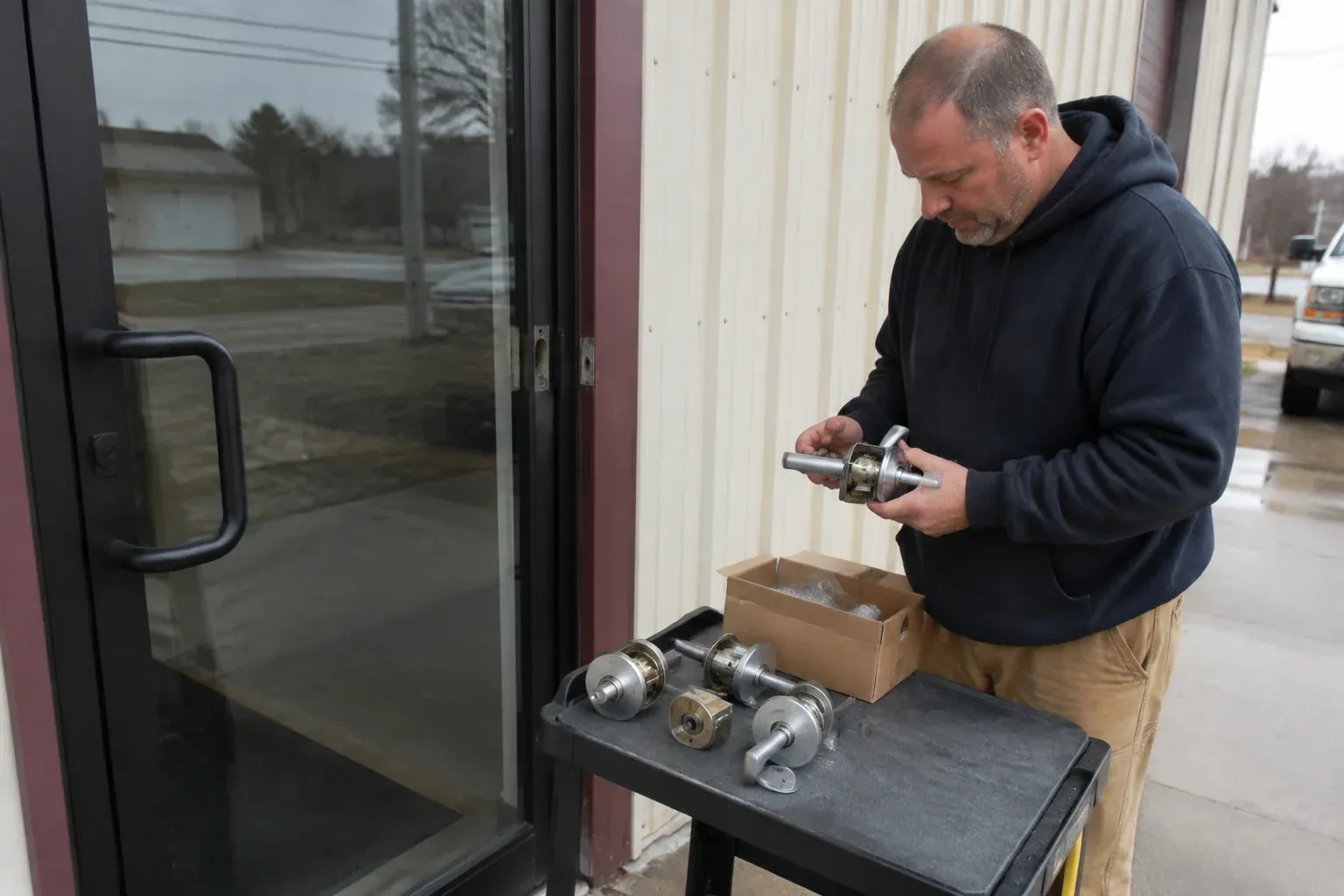
A business door rarely fails the same way a house door does, because it opens far more often and often has to satisfy a fire or egress rule a home door never faces. Replacement starts by identifying what the opening actually is: a mortise-prepped steel door, a narrow-stile aluminum storefront, a fire-rated door that needs listed hardware, or an exit serving enough people that code calls for panic-style release. The locksmith fits hardware built for that specific opening, connects it correctly to any electric strike or access-control wiring already present, and hands over keys cut and logged to the business's own system.
How the visit goesThe key to the office entrance turns with almost no resistance now, and some mornings the deadbolt does not fully retract until someone jiggles the handle and tries the key again.
Bamberg
How the visit goes
Reading the door before the lock
The door tells the locksmith what kind of hardware it can even accept. A hollow-metal or solid wood door with a mortise pocket cut into the edge takes a mortise lock body; an aluminum storefront door with a narrow stile takes a purpose-built narrow-stile lock or hookbolt; a standard cylindrical bore takes a heavy-duty lockset sized to that hole pattern. Handing, swing, backset and existing strike location are measured so the replacement drops into the prep that is already there rather than requiring the door itself to be re-cut.
Removing the old hardware cleanly
The existing lock, cylinder and strike come out without enlarging the door's mortise pocket or bore, since a clean prep is what lets the new hardware seat correctly. Any hardware that was previously mismatched to the door, an incorrect backset or a strike screwed in at an angle, is noted so the business understands why the last repair may not have held. The old hardware is set aside for the business to keep, dispose of, or use as a reference for other doors still running the same outdated lockset.
One key system instead of a patchwork
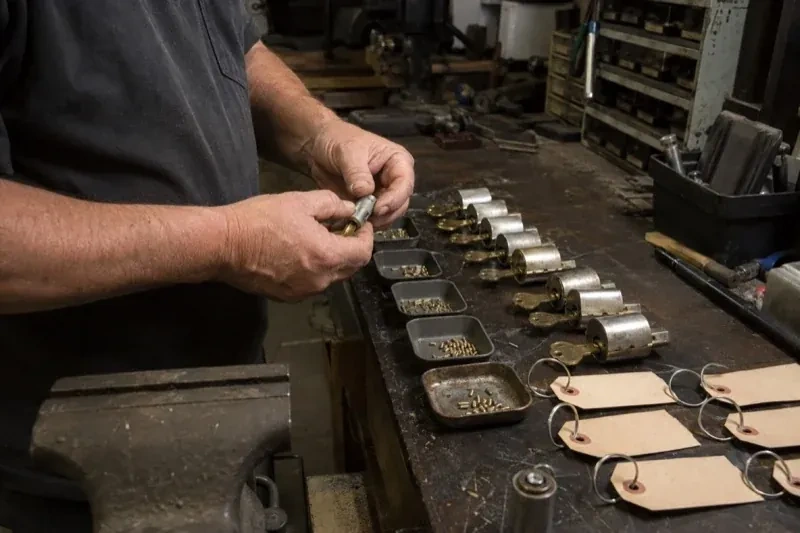
Where the visit brought hardware onto a shared master or interchangeable-core system, the business now has one coherent structure instead of a different cylinder on every door. A master key opens what it is supposed to, sub-master and change keys are limited to their own doors, and the key-control log reflects exactly who was issued what. The next time a lock needs attention, whoever handles it can read that log rather than guessing at what system, if any, the previous hardware belonged to.
Commercial-Grade Lock Replacement
In the van
- Mortise prep and installation tools
- Hookbolt and deadlatch hardware
- Mortise lock body
- Interchangeable-core cylinder
- Key cutting and coding machine
What affects the quote
Same fees day, night or weekend
1Electrified hardware and access-control integration
An electric strike, maglock or reader tie-in adds parts and testing time beyond a purely mechanical lock, and the quote separates that electrified work from the mechanical hardware so each is clear on its own.
2Keying complexity
A single stand-alone cylinder is the simplest keying job. A master or grand-master structure spanning multiple doors, departments or locations takes more planning and more cylinders to combinate correctly, and that planning is part of the quote.
3Key-control documentation
Setting up or updating a written key-control log, recording who holds which key and which doors share a system, is a small but distinct task the quote can name separately from the physical hardware work.
Commercial-Grade Lock Replacement: questions
My storefront door is aluminum and glass. Does it need special hardware?
Yes. An aluminum storefront door has a narrow stile, the vertical metal frame around the glass, that a standard mortise or cylindrical lock cannot physically fit into. These doors take a narrow-stile lock or a hookbolt built specifically for that slim profile, and matching the hardware to the frame is what lets the bolt engage the keeper fully instead of catching at an angle.
Can a tenant request commercial lock replacement, or does it have to go through the landlord?
This depends on the lease and on which doors are involved. A tenant can generally arrange work on hardware inside their own leased space, while entry doors, shared corridors and building-wide systems usually involve the property manager or landlord, since a change there can affect other tenants' access as well. Confirming this before the visit avoids hardware being installed that has to be redone.
What should I do with the old hardware once it is replaced?
That is entirely your choice. Some businesses keep old hardware briefly in case a spare part is needed elsewhere on the same system, others prefer it removed from the site straightaway, particularly after a break-in where the damaged pieces are no longer wanted around. The locksmith can leave it with you or take it away, whichever you prefer.
Commercial Locks
- Master Key System DesignA property manager taking over a small commercial building inherits a shoebox of keys with no…
- Access Control InstallationYou just leased the empty unit next door and want the new tenant to open their own suite without a…
- Panic & Exit HardwareThe daycare wants the yard gate and the classroom door alarmed so a staff member hears the moment…
Commercial-Grade Lock Replacement near you
For a household in Bamberg the common requests are a rekey after moving in, a lockout, a deadbolt that grinds, and a lock that finally needs replacing. For a business they are storefront hardware, staff key control and exit devices. Both lists, and a few less common jobs, are laid out here.