Lockouts · Waterloo
Home Lockout Service
After a week of humid weather the back door has swollen in its frame. The key turns, you can feel the bolt trying to move, but it is jammed hard against the strike plate and the door refuses to open.
Home Lockout Service
In plain words
Winter creates its own kind of lockout. Meltwater runs into a keyway during the day and freezes overnight, a weather-exposed cylinder stiffens in the cold, and a door that shrank in January may drop its bolt out of line with the strike. A home lockout visit in these conditions is as much about the door as the lock: the locksmith thaws and frees the cylinder without forcing it, checks whether the bolt or the frame is the real obstacle, and opens the door in a way that leaves the hardware sound. A little dry lubricant and a tube of de-icer usually finish the job.
How the visit goesThe key slides in and turns all the way round, but the bolt stays put. There is no click, no resistance, just a key spinning in a lock that has stopped listening to it after years of daily use.
Waterloo
How the visit goes
Cold, ice and salt on the hardware
In winter the assessment starts with the weather. A keyway that took on meltwater during a thaw can be frozen solid by morning, and salt spray from a nearby driveway leaves a crust that gums up the pins. The locksmith looks for frost around the cylinder face, tests how far the key seats, and feels whether the plug is stiff from cold grease or genuinely iced. This decides between a gentle thaw with lock de-icer, warming the cylinder, or picking once the ice releases. It also flags hardware that should get a dry lubricant and a weather cover afterwards so the same morning does not repeat next week.
Opening a latched knob or lever
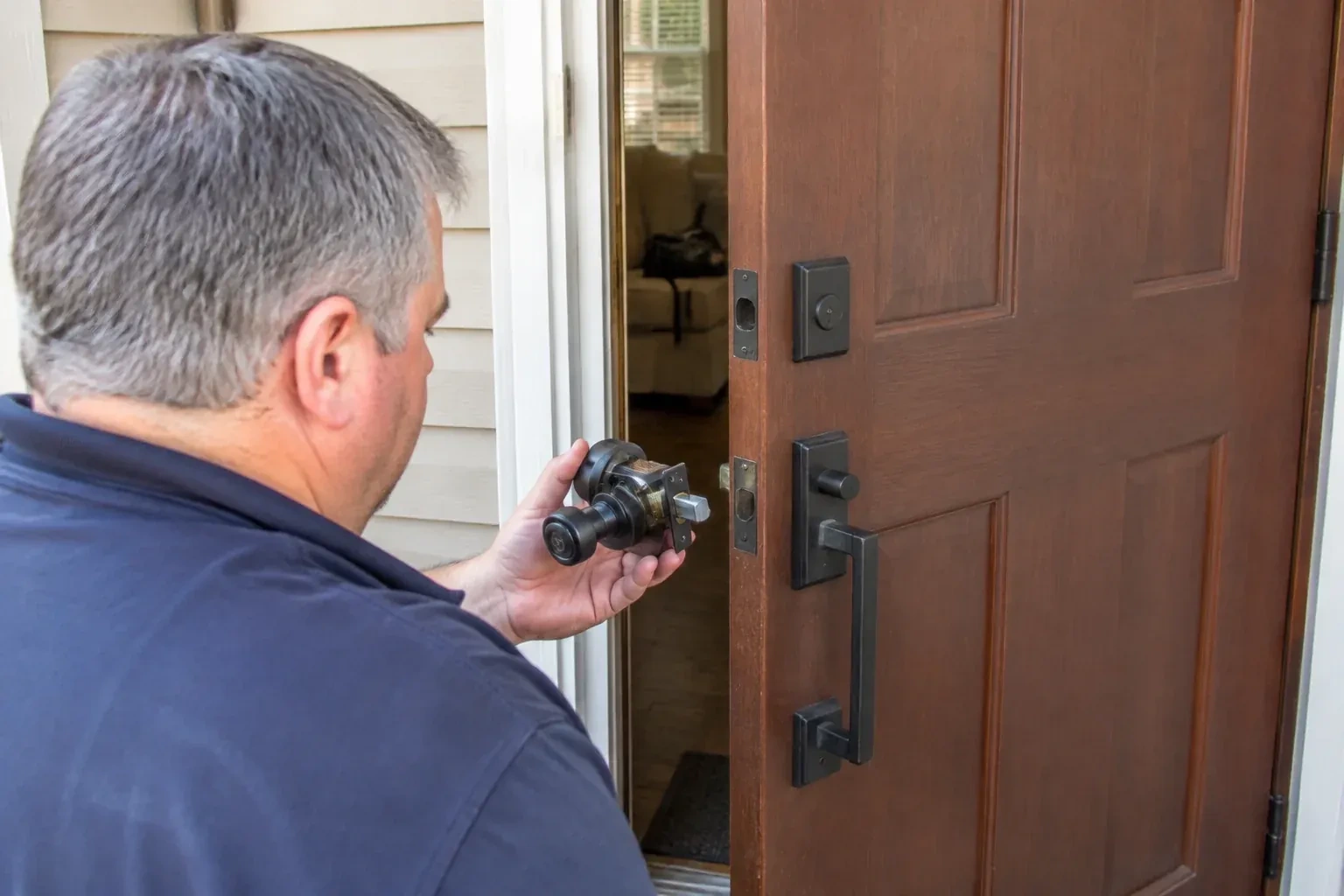
When the door has simply latched behind you and the deadbolt was never thrown, the job is often the gentlest one a locksmith does. A spring latch is bevelled so the door can close on it, and without an engaged auxiliary deadlatch that bevel lets a latch tool ease it back without touching the keyed cylinder; a properly engaged deadlatch resists that and needs a different approach. Where the door-frame gap is tight, or a guard plate covers the latch, the locksmith picks the knob cylinder instead, routine work on standard residential hardware. The knob is then checked for a loose spindle or sagging latch, since a door that catches unexpectedly is often telling you the latch is worn.
A plan for the next time keys go missing
Most people leave a lockout with a resolution never to repeat it, and a few habits make that real. A spare key with a trusted neighbour or nearby relative is the classic answer. A small combination lockbox fixed somewhere discreet, with the code shared only with people you trust, is a step up and avoids the flowerpot and the door frame, which are the first places anyone looks. Households with keypad or smart locks can add a family member's code so a lost key is an inconvenience rather than an evening on the porch. The locksmith can fit a lockbox or program a code while still on site if you ask.
Home Lockout Service
In the van
- Replacement cylinder or deadbolt
- Nine-volt battery for smart locks
- Plug follower and repinning kit
- Dry graphite or PTFE lubricant
- Plug spinner
What affects the quote
Same fees day, night or weekend
1Type and grade of the lock
A builder-grade knob latch, a residential deadbolt, a mortise case in an older home and a high-security cylinder each take different tools and different amounts of time to open, and that difference shows in the quote.
2Restricted or high-security keyways
Security pins, sidebars and patented keyways take longer to open and, if replaced, cost more as hardware than a standard cylinder. Restricted keys also have to be cut from the system's records rather than duplicated.
3Damage from earlier attempts
A latch bent by a credit card or a cylinder scarred by a screwdriver may need repair or replacement in addition to the opening. The locksmith points out what was already there before quoting that part.
Home Lockout Service: questions
How should I look after my lock so it stays reliable?
A little attention twice a year is enough. Follow your lock's own care instructions: many take a puff of dry graphite or PTFE lubricant worked in with the key, some a specified liquid product instead; general-purpose oils collect grit. Retire keys that have worn thin and cut fresh ones from a crisp original or the code. Snug up hinge and strike screws each spring and fall as the door moves with the humidity. A key that starts needing a wiggle is an early warning worth acting on.
My key turns but the door stays locked. What is going on?
A key that spins freely without moving the bolt usually means the connection between the cylinder and the bolt has failed: the tailpiece or cam at the back of the cylinder has broken or slipped, or the internal parts of an older mortise lock have worn. The good news is that this is a hardware fault rather than a lost key, so once the door is opened the fix is a repaired or replaced cylinder and your keys keep working.
What is the difference between rekeying and replacing a lock?
Rekeying keeps the lock you have and changes only the pins inside the cylinder so a new key operates it and the old one no longer does. It suits hardware that is in good shape and simply needs a fresh key. Replacing swaps the whole lock or cylinder for new hardware, which makes sense when the existing lock is worn, damaged, of low grade, or when you want a different style or a keypad. Either can be done during a lockout visit.
Lockout Services
Home Lockout Service near you
Every lock service we provide in Waterloo starts with the same first step, which is looking at the door properly before deciding anything. The individual pages below explain what that look involves for each job, how the work is carried out, and what to expect from the hardware afterwards.