Change or rekey · Waterloo
Deadbolt Installation in Waterloo
Someone tried the door last winter. The frame took it, but the strike plate is bent, one screw hole is stripped, and the bolt sits in the pocket at a slight angle.
Deadbolt Installation
In plain words
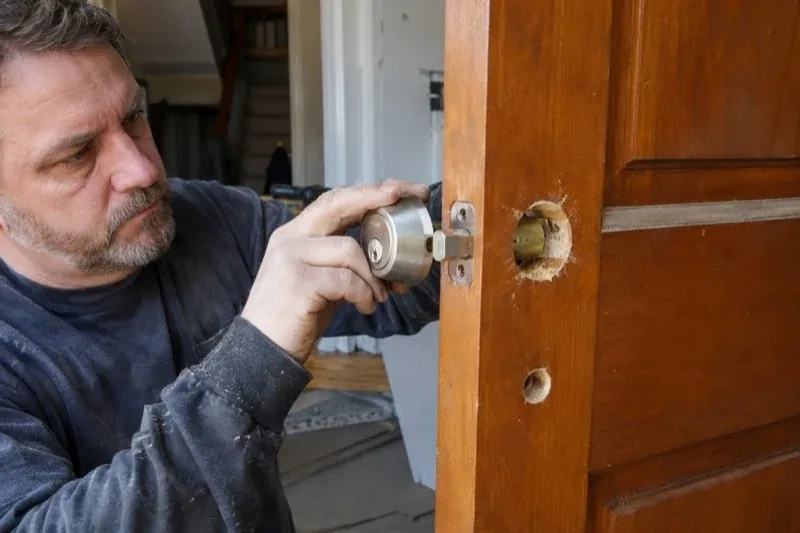
Replacing an existing deadbolt is usually a matter of matching rather than cutting. The locksmith measures the cross bore, the edge bore and the backset, checks the door thickness, and picks a bolt that drops into the holes you already have. Where the old lock was a builder-grade unit, the replacement can step up to a heavier grade with a hardened bolt, a free-turning collar around the cylinder and a low-profile face that gives a wrench nothing to grip. The old strike is checked against the new bolt's instructions, and where it calls for it, a reinforced strike and long screws go in while the door is already apart.
How the visit goesThe door from the garage into the kitchen closes on a passage knob with no lock at all. Anyone who opens the garage is one turn of a handle from the house, and the insurance renewal form has a question about exactly that.
Waterloo
How the visit goes
Which key should open it
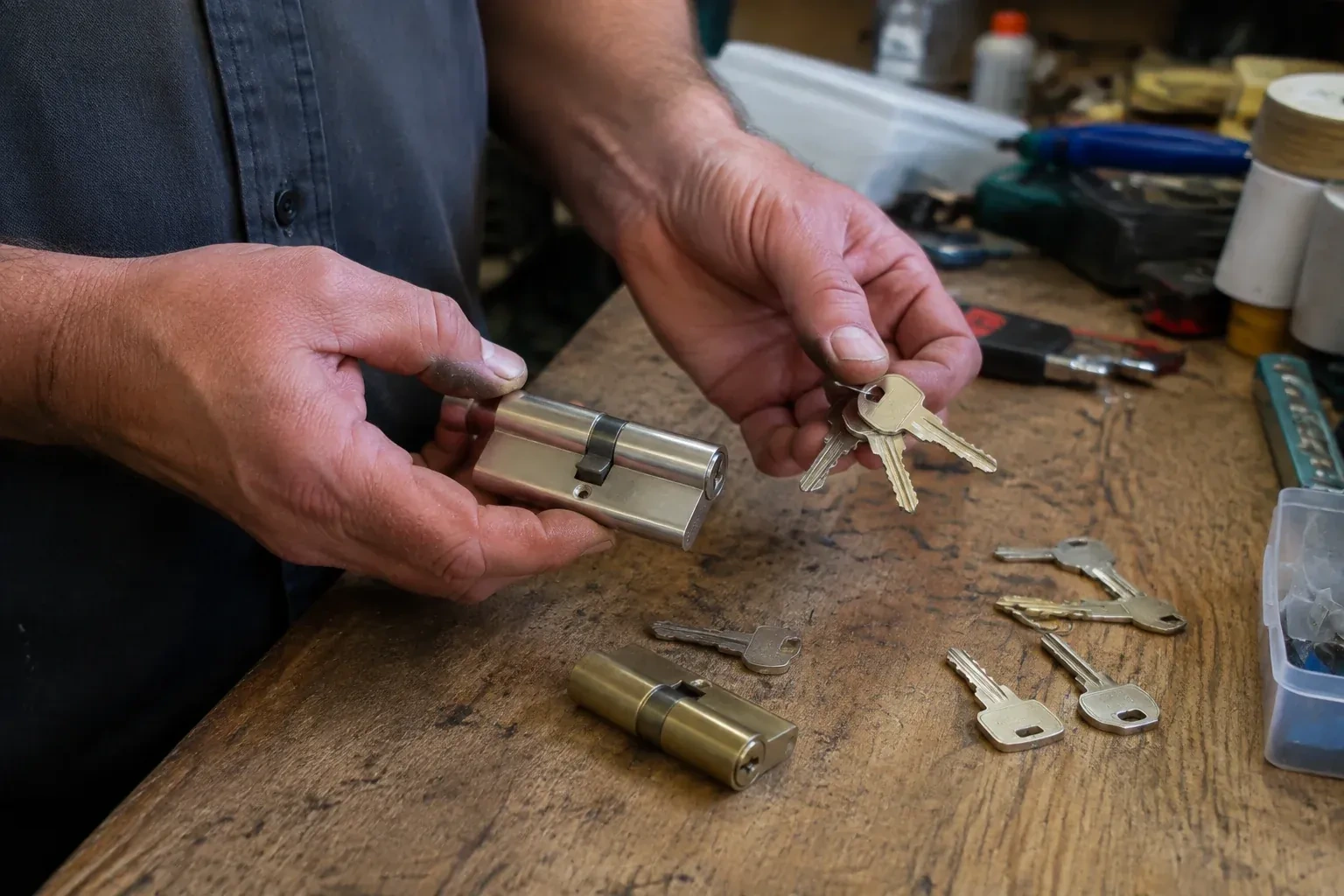
A deadbolt is also a key decision, so the locksmith asks how the household's keys are arranged now. If every door shares one key, the new cylinder can be pinned to that same key, provided the keyways match, so nobody's ring grows. If the house has just changed hands, this is the natural time to set the new bolt and the other exterior locks to a fresh key and retire whatever copies are out there. Restricted or high-security keyways, keypad models with a backup cylinder and locks that must match a rental building's system all steer the choice of hardware, and it is easier to settle this before the box is opened than after.
Swapping an old deadbolt in place
When an existing bolt is being replaced, the work starts by backing out the two inside screws and lifting off both housings, then removing the bolt from the edge. The bore and backset are measured against the new hardware, and any difference is dealt with before the new bolt goes in: a larger bore for a smart deadbolt, a different faceplate shape, or a spacer for a thinner door. The new bolt, cylinder and thumb-turn go on in the usual order. The old strike comes off too, the pocket is deepened if needed, and a reinforced strike with long screws replaces it, so the upgrade happens on both sides of the gap.
Looking after it through the seasons
A deadbolt asks for very little, and most of it happens twice a year. In spring and again in autumn, throw the bolt with the door closed and notice whether it still slides in freely; wood doors swell in humid summers and shrink in dry winter air, and the first sign is a bolt that needs the door pulled before it will lock. If so, a small strike adjustment puts it right. Give the bolt and keyway a puff of whatever lubricant the lock's own maker specifies, often dry PTFE or graphite, since some cylinders are serviced with oil instead. Wipe salt off the outside trim after a slushy week so the finish stays bright.
Deadbolt Installation
In the van
- Reinforced strike plate
- Boring jig and 54 mm hole saw
- Rekeying pins and key blanks
- Sharp chisel and mallet
- Dry PTFE lubricant
What affects the quote
Same fees day, night or weekend
1Hardware supplied by you or by the locksmith
If you have already bought the lock, the quote covers labour and any adaptation of the door to that kit. Hardware supplied from the van is listed separately with its grade and finish.
2Keying alike or a fresh key
Pinning the new cylinder to your existing key, or setting several doors to a new key, is bench work quoted per cylinder, plus the number of keys you ask to have cut.
3Non-standard bore or backset
Older doors with a small cross bore, an unusual backset or a mortise lock case need adapting or filling before a modern deadbolt fits, and that preparation is quoted before work begins.
Deadbolt Installation: questions
What do backset and bore mean, and why does the locksmith ask?
Two measurements decide whether a deadbolt fits your door. Bore is the diameter of the big hole through the face, 54 mm on most current hardware. Backset is how far the centre of that hole sits from the door's edge, 60 mm or 70 mm on nearly all residential doors. A replacement must match both to use the existing holes, and a fresh installation is cut to match the knob below, so knowing them ahead puts the right hardware on the van.
Will drilling a new deadbolt damage my steel or fibreglass door?
Not when it is done for that door. Steel-clad doors are cut with a fine-toothed hole saw run slowly through the skin, guided by a jig so the saw cannot skate on the smooth face, and finished from both sides so each skin stays clean. Fibreglass is scored first so the surface does not chip. Shavings are vacuumed from the foam core, and the edge is finished with a collar or plate suited to the stile inside.
Can a deadbolt be added to a door that only has a knob?
Yes, on nearly any wood, steel-clad or fibreglass entry door. The locksmith marks a spot above the knob, clamps a jig to the door and bores a cross hole through the face and a smaller hole through the edge, then cuts a pocket and fits a strike on the frame. The main things checked first are the door's thickness, what is inside it at that height and whether glass sits close by.
Change or Rekey Locks
- Lock Replacement & UpgradeThe lever on the side door droops toward the floor and rattles in your hand.
- Vintage Mortise Lock ServiceThe key turns freely in the round cylinder on the door, all the way around and back, without the…
- Smart Lock InstallationHalf the evenings someone asks whether the back door got locked, and nobody is sure.
Deadbolt Installation near you
Every lock service we provide in Waterloo starts with the same first step, which is looking at the door properly before deciding anything. The individual pages below explain what that look involves for each job, how the work is carried out, and what to expect from the hardware afterwards.