Change or rekey · Waterloo
Lock Rekeying in Waterloo
Your roommate moved out last weekend. Rent is settled, the room is empty, and the key is still on their ring.
Lock Rekeying
In plain words
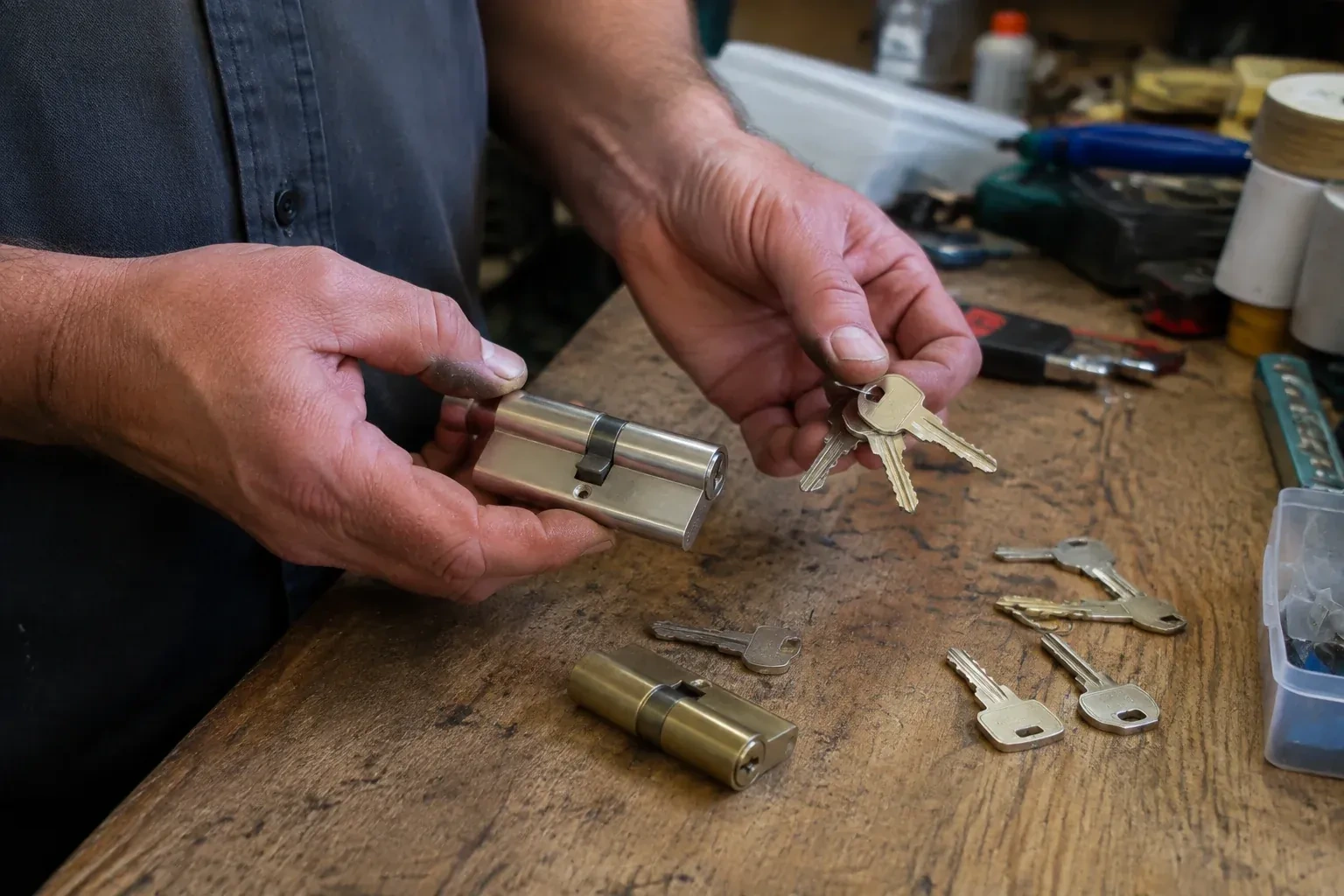
What you keep after rekeying is almost everything. The deadbolt, the handle set, the finish that matches your door hardware, the strike plate and the holes in the door all stay exactly where they are, which matters on an older door where new hardware rarely lines up with old mortises. What changes is a handful of brass pins a few millimetres long inside each cylinder, and the key in your pocket. The work is done on site, one cylinder at a time, so the house is never left with an unsecured door, and worn springs or a sticky plug can be dealt with while the cylinder is already apart.
How the visit goesThe builder handed over your new home with a stack of identical keys, and you know the framing crew, the painters and the flooring installers all used a construction key during the build. The doors are brand new, but the key that opens them should be yours alone.
Waterloo
How the visit goes
Walking every door that should be included
Before a single cylinder comes out, the locksmith walks the property with you and lists each opening: the front door, the back and side doors, the door from the garage into the house, a walkout basement, a gate with a keyed latch, a shed, a mailbox, and any interior door you want on a key. It is surprising how often the garage's side door or the storm door is forgotten and left on the old key. The list becomes the plan for the visit and, at the end, the record of what was done. A door that is not on the list is not rekeyed, so the walk is worth two careful minutes.
Cutting the new key and gauging the depths
On this cylinder type, the new key comes first, then the pins to match it. The locksmith cuts a fresh key from a blank on a code cutter or duplicator, choosing a combination that is not close to the old one, and reads each cut with a key gauge to find its depth on the manufacturer's scale. Bottom pins of the matching lengths are picked from a graded pin kit and dropped into the plug chamber by chamber, so that when the new key is inserted every pin top sits exactly at the shear line. A key cut from a clean blank and pins matched to it by gauge is what gives a rekeyed lock that crisp, new feel.
Handing keys out with a little method
Rekeying gives you a clean start on who holds a key, and a few habits keep it clean. Give a key only to people who need one regularly, and know who they are. If a dog walker, a cleaner or a contractor needs access for a season, a lockbox with a code you can change afterwards is simpler than a key you have to ask for back. Tag spares with a colour or a number rather than the address. When a key does leave your control, a lost ring, a departing tenant, a relationship that has ended, that is the trigger to rekey again, and the next visit is simpler because the doors are already on one system.
Lock Rekeying
In the van
- Pinning tweezers and tray
- Key tags and keying record
- Graded bottom pin kit
- Cylinder shim
- Code cutter or key duplicator
What affects the quote
Same fees day, night or weekend
1How many cylinders are included
Each cylinder is removed, pinned and tested on its own, so a single deadbolt and a house with six exterior locks plus a shed and a gate are very different visits, and the quote follows the count.
2Interior doors added to the plan
Bedroom, office or storage-room locks brought onto a key are lighter work than exterior deadbolts, but each is still a cylinder to pin and test, and the count includes them.
3Smart lock override cylinders and codes
Pinning the backup cylinder of a keypad or app lock to the house key is a small extra task, and reviewing or deleting user codes at the same time is another, each named in the quote.
Lock Rekeying: questions
What happens to my old keys?
They become ordinary pieces of brass. Once the cylinders are pinned to the new combination, the old keys turn nothing on your property, so there is no security reason to keep or hide them. Hand them to the locksmith for disposal or drop them in the metal recycling. If a former roommate or contractor still has one, it no longer matters, which is the whole reason for the visit. Keep only the new set, counted and tagged.
Will my door hardware look any different afterwards?
No. The work happens inside the cylinder, so the bolt, handle, finish and strike plate stay exactly as they are, and nothing new is cut into the door. The only visible change is the key in your hand. If a cylinder does have to be replaced, because its keyway is incompatible with the others or it has worn out, the locksmith picks one in a matching finish so the door keeps a consistent look.
My house is older and has a mortise lock. Can that be rekeyed?
Yes. A mortise lock, the kind with a large case set into the edge of the door, uses a threaded cylinder held by a set screw reached from the door's edge. The cylinder unthreads, is pinned like any other and screws back in. Where a very old lock uses a bit key or a lever mechanism instead of a pin cylinder, the locksmith will explain the options, which may include fitting a modern cylinder into the existing case so the door keeps its original hardware.
Change or Rekey Locks
- Lock Replacement & UpgradeThe lever on the side door droops toward the floor and rattles in your hand.
- Vintage Mortise Lock ServiceThe key turns freely in the round cylinder on the door, all the way around and back, without the…
- Smart Lock InstallationHalf the evenings someone asks whether the back door got locked, and nobody is sure.
Lock Rekeying near you
Every lock service we provide in Waterloo starts with the same first step, which is looking at the door properly before deciding anything. The individual pages below explain what that look involves for each job, how the work is carried out, and what to expect from the hardware afterwards.