High security · Waterloo
Safe Installation & Servicing
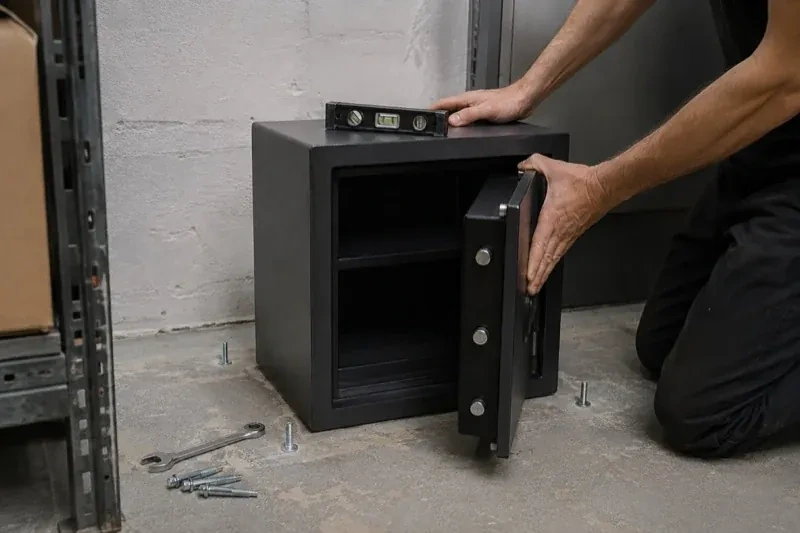
Behind the filing cabinets sits a heavy floor safe nobody ever bolted down, left exactly as the last owner set it. It opens fine, but a determined pair of hands could simply tip it into a van.
Safe Installation & Servicing
In plain words
Businesses call for this service for two different reasons that sometimes overlap: protecting cash held overnight, and protecting paper records that would be enormously slow to recreate. The two priorities point toward different construction, since a cash-rated body resists tools while a document-rated interior resists heat and holds its temperature down through a timed fire test. Servicing an existing unit follows the same split: bolt-work and lock mechanics get physical attention, while any fire-rated lining is checked for the trapped moisture that builds up behind an airtight seal.
How the visit goesA homeowner inherited a heavy old dial safe from a parent's house, moved it into the new place, and has no idea whether the bolt-work still works, whether the lock is sound, or how it should be anchored.
Waterloo
How the visit goes
The condition of a safe that is already in place
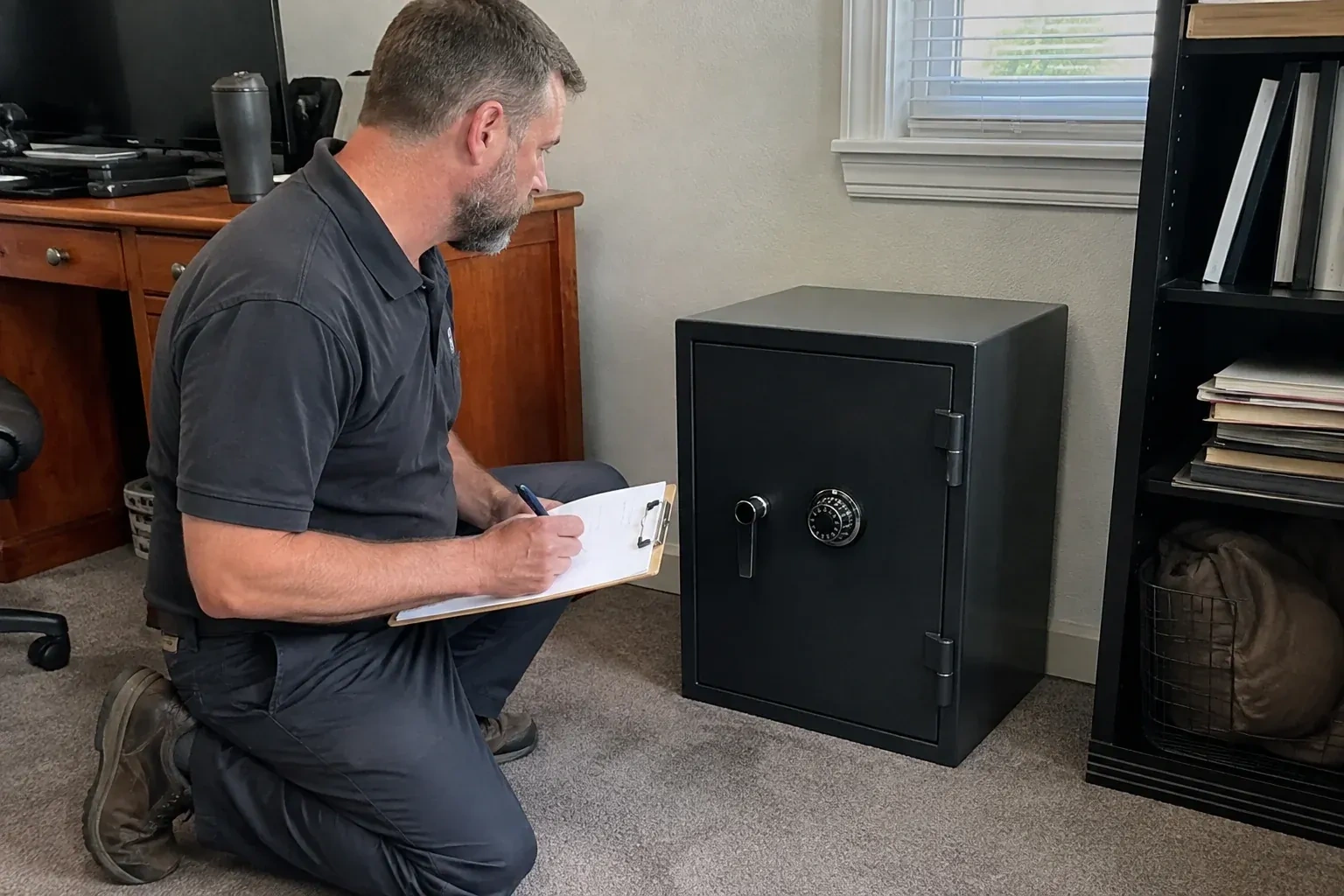
For a servicing visit, the first look is at what years of sitting quietly have done to the unit. Bolt-work is worked by hand to feel for stiffness, grinding, or a bolt that does not fully retract. Hinges and the door seal are checked for rust or a gap that lets in air. The locksmith also asks how long it has been since anyone changed the batteries or tested the lock, because a unit that has never had attention since it was installed usually needs more than a light check to bring it back to full working order.
Moving a safe without moving the problem with it
Relocating a bolted-down safe starts with removing the existing anchors cleanly, since a broken bolt left in the floor becomes someone else's problem later. The safe is walked or wheeled out on equipment built for its weight, with the route measured in advance so it clears every doorway and turn. At the new address the same assessment happens as for a brand-new installation: the floor or wall is identified, the safe is leveled, and it is anchored again from scratch rather than assumed to sit safely just because it once did elsewhere.
A schedule for the next visit
A safe does not announce when it needs attention the way a squeaky hinge does, so it helps to put a rough date on the calendar rather than waiting for a sign of trouble. Checking the bolt-work, the batteries, and the door seal every year or two catches small stiffness or corrosion long before it becomes a stuck lock. Businesses with heavier daily use, such as a till safe opened many times a shift, generally benefit from a shorter interval between checks than a document safe opened rarely.
Safe Installation & Servicing
In the van
- Level and floor shims
- Bolt-work lubricant
- Moving dolly and floor protection
- Mounting plate
- Wood subfloor lag bolts and washers
What affects the quote
Same fees day, night or weekend
1Documentation requested
Some customers want photographs of the anchoring, a written note of the model and ratings, or both, usually to satisfy an insurer, and preparing that paperwork adds a little time to the visit.
2New installation versus servicing an existing unit
Fitting a brand-new safe involves positioning, anchoring, and lock setup from scratch, while servicing an existing one focuses on bolt-work, lock testing, and confirming or adding anchoring, generally a shorter list of tasks.
3Access route to the final position
Stairs, narrow doorways, tight corners, and whether an elevator or loading dock is involved all affect how the safe gets to its spot and how much handling that route requires.
Safe Installation & Servicing: questions
How much weight does a filled safe put on the floor?
It depends entirely on the unit's size and construction, since the steel body itself usually weighs far more than whatever ends up inside it. A small document safe and a large commercial unit sit at very different points on that scale. Confirming the safe's own weight before delivery, and checking it against the floor it will sit on, is part of the assessment rather than something guessed at on arrival.
What does a typical installation or servicing visit involve?
The visit opens with a look at what the safe needs to protect and where it will sit, moves into positioning and anchoring for a new unit or bolt-work and lock testing for an existing one, and ends with the lock cycled several times and a combination or code set that only the owner knows. The exact order shifts depending on whether the job is a new installation or ongoing servicing.
Will anchoring damage my flooring?
Anchoring leaves small holes at the anchor points, sized to the bolts being used, and on a finished floor these sit under the safe itself where they are never seen again. On tile, the risk of cracking nearby tiles is real enough that an alternative fastening point or a different spot in the room is often chosen instead of drilling straight through the tile itself.
High Security Locks
Safe Installation & Servicing near you
Every lock service we provide in Waterloo starts with the same first step, which is looking at the door properly before deciding anything. The individual pages below explain what that look involves for each job, how the work is carried out, and what to expect from the hardware afterwards.