Lockouts · St. Clements
Home Lockout Service in St. Clements
After a week of humid weather the back door has swollen in its frame. The key turns, you can feel the bolt trying to move, but it is jammed hard against the strike plate and the door refuses to open.
Home Lockout Service
In plain words
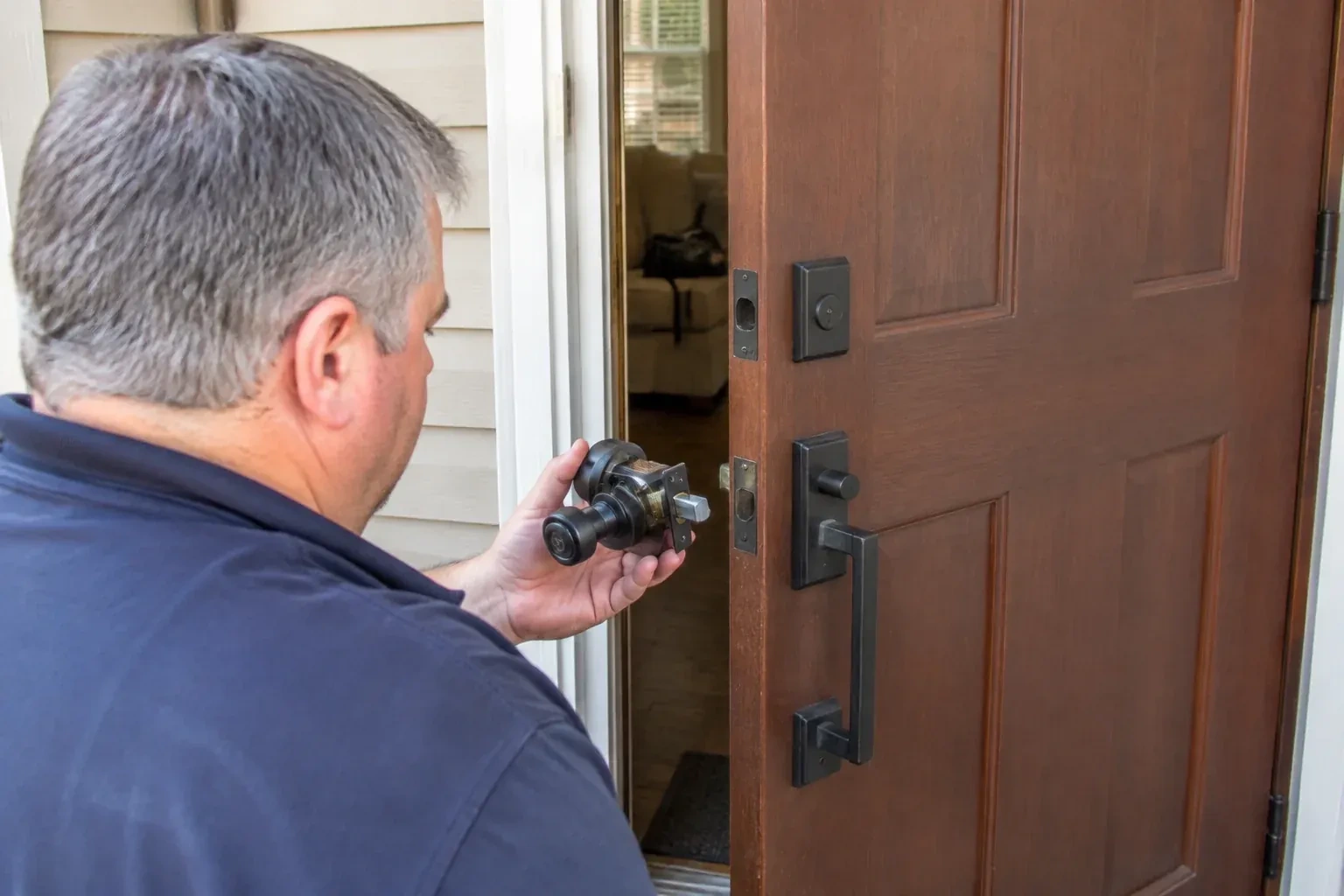
Most lockouts end with the original lock still on the door and still working. That is the point of professional entry: picks, tension tools, decoders and latch tools are designed to operate the mechanism the way a key would, without cutting or prying anything. Drilling is reserved for cylinders that will not yield, and when it is the only route the locksmith says so before starting and fits a replacement cylinder in the same visit so you are never left with a hole where a lock used to be. You keep your hardware, your finish and your existing keys whenever the situation allows.
How the visit goesYou stepped out to grab the recycling bin and the door swung shut behind you. Through the glass you can see your keys hanging on the hook by the stairs, exactly where they always are, and the latch has caught.
St. Clements
How the visit goes
Other ways in, and other locks on the same key
Before working on the front door, the locksmith asks about the rest of the house. A back door, a side entrance from the garage or a walkout basement may be on the same key or on a different one, and occasionally a family member with a spare is closer than anyone realized. Knowing whether the front and back locks are keyed alike also matters later: if one cylinder is rekeyed after a lost key, the others should follow so the household stays on a single key. A short tour of the openings takes a minute and often changes which door gets worked on and how.
Working a deadbolt open
A thrown deadbolt has no bevel to exploit, so the cylinder itself has to be persuaded. The locksmith applies light rotational tension to the plug and sets each pin to the shear line, or reads the pin heights with a decoder and cuts a key that matches. Some cylinders let the plug turn one way only; a plug spinner flicks it past the point where the tailpiece engages so the bolt can retract. Security pins slow the process rather than stop it. The bolt draws back, the door opens, and the cylinder is cycled with your key afterwards to confirm nothing inside was disturbed by the work.
A plan for the next time keys go missing
Most people leave a lockout with a resolution never to repeat it, and a few habits make that real. A spare key with a trusted neighbour or nearby relative is the classic answer. A small combination lockbox fixed somewhere discreet, with the code shared only with people you trust, is a step up and avoids the flowerpot and the door frame, which are the first places anyone looks. Households with keypad or smart locks can add a family member's code so a lost key is an inconvenience rather than an evening on the porch. The locksmith can fit a lockbox or program a code while still on site if you ask.
Home Lockout Service
In the van
- Replacement cylinder or deadbolt
- Nine-volt battery for smart locks
- Plug follower and repinning kit
- Dry graphite or PTFE lubricant
- Plug spinner
What affects the quote
Same fees day, night or weekend
1Electronic lock work
A dead smart lock may need batteries, a reset, reprogramming of codes or pairing to your phone once the door is open. Each of those is a small task that the quote names separately.
2Weather on the day
A cylinder frozen solid or a door iced to its frame takes patient thawing before any opening can begin, so a winter call in a cold snap is quoted with that extra time in mind.
3Door and frame adjustment
When the lockout was really a swollen or sagging door, fixing the cause means work on hinges, strike plate or weatherstrip. That adjustment is quoted as its own item alongside the opening.
Home Lockout Service: questions
How should I look after my lock so it stays reliable?
A little attention twice a year is enough. Follow your lock's own care instructions: many take a puff of dry graphite or PTFE lubricant worked in with the key, some a specified liquid product instead; general-purpose oils collect grit. Retire keys that have worn thin and cut fresh ones from a crisp original or the code. Snug up hinge and strike screws each spring and fall as the door moves with the humidity. A key that starts needing a wiggle is an early warning worth acting on.
My key turns but the door stays locked. What is going on?
A key that spins freely without moving the bolt usually means the connection between the cylinder and the bolt has failed: the tailpiece or cam at the back of the cylinder has broken or slipped, or the internal parts of an older mortise lock have worn. The good news is that this is a hardware fault rather than a lost key, so once the door is opened the fix is a repaired or replaced cylinder and your keys keep working.
What is the difference between rekeying and replacing a lock?
Rekeying keeps the lock you have and changes only the pins inside the cylinder so a new key operates it and the old one no longer does. It suits hardware that is in good shape and simply needs a fresh key. Replacing swaps the whole lock or cylinder for new hardware, which makes sense when the existing lock is worn, damaged, of low grade, or when you want a different style or a keypad. Either can be done during a lockout visit.
Lockout Services
Home Lockout Service near you
The services offered in St. Clements answer the questions a door eventually asks. Who else has a key? Why does the bolt drag? Would a stronger cylinder be worth it? Can staff leave without a key? How do I open the safe my father left? Each answer is on the pages below.